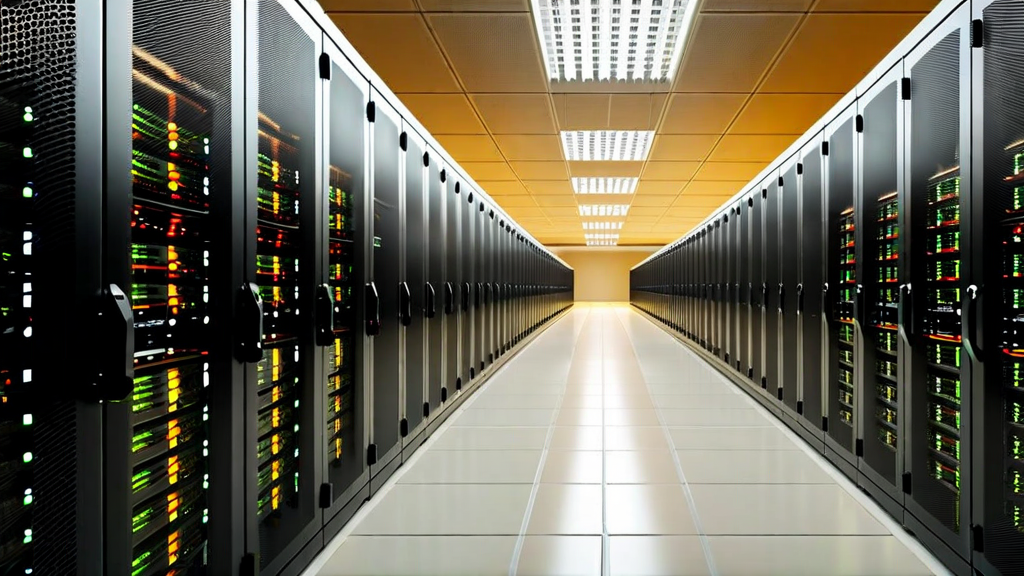
The compute infrastructure underpinning enterprise machine learning is undergoing its most significant architectural transformation since the adoption of GPU acceleration for deep learning training in the early 2010s. That decade-old shift — moving computation from general-purpose CPU clusters to massively parallel GPU arrays — enabled the deep learning revolution. The current transformation is broader in scope and more complex in character: it encompasses not just hardware design but the entire stack, from data center power delivery and cooling architectures to the software abstractions that determine how enterprises allocate and share AI compute resources.
Several converging forces are driving this transformation. The scale of frontier model training has grown exponentially, from hundreds of GPUs to tens of thousands, testing the limits of existing interconnect fabrics and cluster management systems. Simultaneously, the shift from training-dominant workloads to inference-dominant production deployments has exposed the mismatch between hardware optimized for batch training and the latency and throughput requirements of real-time inference serving. Custom silicon from hyperscalers and a new generation of AI chip startups is fragmenting the GPU-dominated landscape. And the rise of inference-time compute scaling — using more computation at inference time to improve output quality — is creating demand for inference infrastructure that rivals training infrastructure in scale. Understanding these trends and their implications is essential for enterprise technology leaders making infrastructure decisions that will shape their AI capabilities for the next five years.
The Disaggregation of Prefill and Decode Compute
One of the most technically significant architectural trends in LLM serving infrastructure is the disaggregation of the two distinct phases of autoregressive text generation: prefill (processing the input prompt to populate the KV cache) and decode (generating output tokens one at a time using that KV cache). These phases have fundamentally different computational characteristics that make collocating them on the same hardware increasingly inefficient as model sizes and context windows grow.
Prefill is compute-bound: it parallelizes well across many tokens simultaneously, saturates GPU tensor cores efficiently, and benefits from the same high-compute-density hardware that excels at training. Decode is memory-bandwidth-bound: it reads the KV cache for every active sequence at every generation step, and the bottleneck is how quickly the GPU can stream that cached data rather than how many floating-point operations it can execute. As context windows extend to 128K, 256K, and eventually 1M tokens, the KV cache for a single long-context request can exceed 100GB, making KV cache management the dominant constraint in serving system design.
Prefill-decode disaggregation solves this by dedicating separate pools of hardware to each phase. High-compute-density instances handle prefill; high-memory-bandwidth instances handle decode. Requests arrive at a router, are dispatched to a prefill instance that processes the prompt and generates the initial KV cache, and are then transferred to a decode instance that carries out generation. The KV cache transfer between instances requires high-bandwidth interconnects — RDMA over Ethernet or InfiniBand at 400Gb/s or higher — and introduces a new latency component that must be managed carefully. But the efficiency gains from matching hardware to workload characteristics can reduce serving cost by 30-50% for long-context workloads, making the architectural complexity worthwhile at scale.
Production implementations of disaggregated serving are emerging from hyperscalers (Google's LLM inference infrastructure has described this approach) and from open-source projects like DistServe and Mooncake. Enterprise infrastructure teams building large-scale LLM serving systems should anticipate that disaggregated architectures will become the standard pattern for high-throughput, long-context deployments within the next two to three years.
Inference-Time Compute Scaling: A New Dimension of AI Capability
The relationship between compute investment and model capability has historically been understood primarily through the lens of training: more compute, more data, and larger models produce better performance according to scaling laws empirically characterized by Chinchilla and its successors. Inference-time compute scaling — investing more computation during response generation rather than during model training — represents a fundamentally different paradigm that is reshaping infrastructure requirements for enterprise AI deployments.
The core insight is that for tasks requiring complex reasoning, systematic planning, or exhaustive search, generating many candidate solutions and selecting the best (best-of-N sampling), or running a model in an extended chain-of-thought reasoning process before committing to an answer, can dramatically improve output quality using a fixed-size model. OpenAI's o1 model demonstrated this approach publicly, generating extended internal reasoning traces before producing responses. The quality improvements on mathematical, scientific, and code generation benchmarks were substantial — often approaching or exceeding the performance of models several times larger that respond without extended reasoning.
For enterprise infrastructure, inference-time compute scaling changes the cost and capacity planning calculus significantly. A deployment that previously required a 70B-parameter model generating a single response per request may achieve equivalent quality with a 7B-parameter model generating 64 candidate responses and selecting the best, but at substantially higher per-query compute cost. The infrastructure implications cascade: serving clusters must handle 10-100x higher token generation volume for the same number of user queries, KV cache memory requirements expand dramatically for extended reasoning traces, and the compute efficiency of the serving layer becomes even more critical to keeping per-query costs acceptable. Enterprises planning inference infrastructure for 2025 and beyond should account for inference-time compute scaling in their capacity models rather than assuming fixed tokens-per-query distributions.
Custom Silicon and the Fragmentation of the AI Accelerator Landscape
For the past decade, NVIDIA's GPU architecture has been the overwhelmingly dominant compute substrate for AI workloads, with AMD maintaining a secondary position and serving primarily as a competitive constraint on NVIDIA pricing. The current landscape is materially different: hyperscalers have deployed custom AI accelerators at a scale that makes them significant factors in total AI compute supply, and a new generation of AI chip startups has raised billions in venture funding to develop differentiated silicon targeting specific points in the performance-efficiency space.
Google's TPU v5e and v5p are deployed across Google Cloud and used for both Google's internal AI workloads and external cloud customers. Amazon's Trainium and Inferentia chips power AWS's AI training and inference offerings. Microsoft has developed its own AI accelerator internally. Meta's MTIA chips are used for inference in Meta's consumer product serving. The collective investment in custom silicon by hyperscalers is massive, and these chips are designed with hardware-software co-design that allows optimization for specific model architectures and workload patterns that general-purpose GPU architectures cannot match efficiently.
Among AI chip startups, the differentiation strategies span a wide spectrum: Cerebras builds wafer-scale processors that eliminate the inter-chip communication bottleneck by fitting an entire large model on a single massive die; Groq builds deterministic inference hardware with predictable, ultra-low latency by eliminating hardware-managed caches in favor of software-scheduled memory access; Graphcore's IPU architecture uses bulk synchronous parallelism and massive on-chip SRAM to minimize off-chip memory access; SambaNova's reconfigurable dataflow architecture adapts the hardware's data movement patterns to specific model structures. For enterprise teams evaluating compute procurement, this fragmentation creates both opportunity (specialized hardware matching specific workload profiles can offer compelling price-performance) and complexity (software ecosystem maturity, framework support, and operational tooling vary widely across platforms).
Networking as a First-Class Concern in AI Cluster Design
The communication-to-computation ratio in large-scale distributed AI workloads makes networking infrastructure a first-class design concern rather than a commodity layer. Training a 100B-parameter model across 1,000 GPUs using tensor parallelism requires every GPU to communicate with every other GPU in its tensor-parallel group at every transformer layer forward and backward pass. The aggregate inter-GPU bandwidth requirement can reach tens of terabits per second, and the latency of that communication directly bottlenecks training throughput.
NVIDIA's NVLink and NVSwitch provide GPU-to-GPU bandwidth within a node (NVLink 4.0 provides 900 GB/s bidirectional bandwidth between two GPUs) and within a rack (NVSwitch 3.0 enables full all-to-all connectivity among up to 256 GPUs at 57.6 Tb/s total bisection bandwidth in the DGX H100 SuperPOD configuration). For inter-rack and inter-pod communication, InfiniBand (typically NDR at 400 Gb/s per port) or high-speed Ethernet (400GbE or 800GbE) form the fabric. The multi-rail design — providing multiple independent network paths between any pair of nodes to maximize aggregate bandwidth — is standard in well-designed AI training clusters.
Beyond raw bandwidth, congestion management in AI network fabrics requires specialized approaches. All-reduce operations (summing gradients across all GPUs in a data-parallel training job) produce highly synchronized all-to-all traffic patterns that can cause severe congestion with traditional Ethernet switching. InfiniBand's RDMA and network-managed congestion control handle these patterns better than Ethernet, which is why InfiniBand remains dominant in the highest-performance training clusters despite Ethernet's lower cost and broader ecosystem. Adaptive routing — dynamically distributing traffic across multiple equal-cost paths based on real-time congestion signals — reduces hotspot formation. RoCE (RDMA over Converged Ethernet) with ECN-based congestion notification brings similar RDMA performance to Ethernet fabrics at lower cost, enabling enterprises that cannot justify InfiniBand's expense to build competitive AI networking.
The AI-Native Data Center: Power, Cooling, and Physical Infrastructure
The physical infrastructure requirements of AI compute clusters are driving a fundamental redesign of data center architecture. A modern AI-optimized server rack containing eight H100 SXM GPUs draws up to 10-12 kW of power; a full rack of eight such servers draws 80-96 kW. Traditional data center design assumes power densities of 5-10 kW per rack; a row of AI compute racks may require 10x the power density of a traditional server deployment. This power density challenge is the limiting constraint on how quickly enterprises can scale AI compute within existing facilities.
Liquid cooling has moved from a niche solution to a practical necessity for high-density AI compute deployments. Direct liquid cooling — running coolant directly to cold plates attached to processors — achieves heat removal efficiency far superior to air cooling, enabling power densities of 100 kW per rack and higher. Rear-door heat exchangers provide a less invasive transition from air-cooled to liquid-assisted cooling by capturing heat from server exhaust air before it enters the hot aisle. Immersion cooling (submerging entire servers in dielectric fluid) provides maximum cooling efficiency and is deployed at several hyperscale AI data centers, though the operational complexity and upfront cost limit its adoption in enterprise environments.
The power grid infrastructure challenges are equally significant. A 100 MW AI data center — a scale that multiple hyperscalers are now deploying — requires utility-grade power connections, on-site transformers, and extensive UPS and backup generation capacity. The energy source for AI compute is attracting increasing scrutiny from enterprise customers, investors, and regulators: training a frontier model can consume gigawatt-hours of electricity, making the carbon intensity of the power supply a material sustainability consideration. Leading AI infrastructure providers are entering long-term Power Purchase Agreements (PPAs) for renewable energy to address this concern, and some are co-locating data centers with nuclear power plants to access large quantities of carbon-free baseload power.
Managed AI Infrastructure and the Operational Efficiency Imperative
The complexity of AI infrastructure at scale — spanning hardware procurement, cluster configuration, network fabric design, storage architecture, job scheduling, and platform management — creates a substantial operational burden that most enterprises are not structured to absorb. The specialized expertise required to run a high-performance GPU cluster efficiently (CUDA optimization, NVLink tuning, InfiniBand fabric management, distributed training debugging) is scarce and expensive. This operational complexity is driving a structural shift toward managed AI infrastructure, where enterprises consume GPU compute through APIs and managed services rather than owning and operating bare-metal clusters.
The managed AI infrastructure market encompasses several distinct segments: hyperscaler AI cloud services (AWS, GCP, Azure GPU instances and managed training services), AI-specialized cloud providers offering higher GPU density and performance than hyperscalers at competitive pricing (CoreWeave, Lambda Labs, Vast.ai), and enterprise AI infrastructure platforms that provide the software stack — job scheduling, resource management, model serving, observability — that transforms raw GPU clusters into productive AI development environments. Each segment offers different tradeoffs of price, performance, flexibility, and operational simplicity.
For enterprise technology leaders, the build-vs-buy decision for AI infrastructure is less binary than it was five years ago. A hybrid model — maintaining a small, strategically sized on-premises GPU cluster for workloads with consistent, predictable demand while bursting to cloud for peak training runs and using managed inference services for production serving — often provides the best combination of cost efficiency and flexibility. The key is accurate workload characterization: understanding the distribution of training run sizes, the QPS and latency requirements of inference workloads, and the data residency constraints that affect what can move to public cloud.
Key Takeaways
- Prefill-decode disaggregation will become the standard architecture for high-throughput LLM serving within 2-3 years, requiring high-bandwidth interconnects and sophisticated KV cache management. Infrastructure teams should begin evaluating this architecture now.
- Inference-time compute scaling changes capacity planning fundamentally: enterprises should model token generation volume per user query as a distribution, not a fixed number, accounting for extended reasoning and best-of-N sampling workloads.
- The AI accelerator landscape is fragmenting beyond NVIDIA dominance. Hyperscaler custom silicon and AI chip startups offer compelling price-performance for specific workloads, but software ecosystem maturity is the critical evaluation criterion.
- Networking is a primary bottleneck and design constraint in AI clusters at scale. InfiniBand remains the performance standard for large training clusters; RoCE with proper congestion management enables competitive AI networking on Ethernet.
- Power density — up to 100 kW per rack for liquid-cooled AI compute — requires physical infrastructure upgrades that often take 18-36 months to complete. Data center capacity planning must account for AI-specific power and cooling requirements years in advance.
- Managed AI infrastructure and hybrid cloud/on-premises models reduce operational complexity while preserving cost efficiency for predictable workloads. Accurate workload characterization is the prerequisite for sound infrastructure decisions.
Conclusion
The trends reshaping enterprise AI compute infrastructure — disaggregated serving architectures, inference-time compute scaling, silicon fragmentation, networking as a primary constraint, AI-native data center design, and managed infrastructure platforms — are not independent forces but a coherent evolution driven by the relentless growth in AI workload scale and the widening gap between AI compute demands and the capabilities of infrastructure designed for general-purpose workloads. Enterprises that understand these trends and make proactive infrastructure decisions — upgrading networking fabrics before they become bottlenecks, planning data center power capacity well ahead of demand, evaluating custom silicon for high-volume inference workloads, and building operational expertise in managed AI platforms — will capture compounding advantages in AI capability and efficiency over those that treat infrastructure as a reactive, procurement-driven function. The organizations that win the AI era will be those that master both the algorithmic and the infrastructure dimensions of enterprise ML.
Continue Reading
Explore more insights on AI infrastructure and distributed computing.
View All Articles